
Vault #27: In the Spotlight
Notable & Newsworthy Immigrants from San Francisco’s Past
-
Nobility and Political Figures
Prince Mahidol Adulyadej (1916): The King of Siam’s son who is now known as the "Father of Modern Medicine" in Thailand.
Princess Ina Salmon (1913): A Tahitian princess known as the "Helen of Troy of Tahiti" who was detained during her first US trip.
Countess Alexandra Tolstoy (1931): Daughter of Leo Tolstoy who underwent a two-hour interrogation regarding her stance on Communism.
Artists and Musicians
Ahn Eak-tai (1930): A world-renowned composer of the South Korean national anthem (Aegukga). He was briefly detained on Angel Island.
Abram Haitowitsch (1916): A blind Russian violinist labeled as a "likely public charge.” He secured his release by playing for the commissioner.
Sergei Prokofiev (1918): The famous Russian composer of Peter and the Wolf was also among those detained at the station.
Activists and Reformers
Ahn Chang-ho (1924): A foundational leader in the Korean American community. In 1924, he was detained for his suspected political beliefs.
Har Dayal (1914): Founder of the Gadar Party and Stanford lecturer. He was arrested for political activities under pressure from Britain.
Toyohiko Kagawa (1935): A Christian pacifist detained for trachoma. He was admitted after the intervention of President Franklin D. Roosevelt.
Athletes and Professionals
Charles Pung (1924): An American Olympic swimmer detained because of his Chinese heritage, while his teammates were permitted to pass.
En Sue Pung (1914): An American baseball outfielder and father of Charles Pung, who was known as “Ty Cobb the Second.”
John Earl (1911/1917): A Civil War veteran and lifelong seaman. Despite being born in California, he was detained twice for lacking documentation.
Lal Bahadur (1922): A skilled animal trapper and business manager for Frank Buck. He was deemed "ineligible to land."
Actors and Performers
Edna Loftus (1913): An English stage star detained due to "morality" investigations regarding her divorce and marriage.
Ferike Boros (1918): A Hungarian actress who appeared in Hollywood films and was held at the station.

In 1916, Prince Mahidol Adulyadej of Siam (Mahidol Songkla), son of King Chulalongkorn and father of Thailand’s future monarchs, arrived in San Francisco en route to study public health and medicine at Harvard. Today, he is recognized as the “Father of Modern Medicine and Public Health” in Thailand. This photo shows the prince with his attachés and immigration inspectors aboard the SS Tenyo Maru. Prior to his arrival in California, the prince had a rough encounter with a customs officer in Honolulu. The story of his journey was reported in the Stockton Independent on August 17, 1916 (click to read). Photo credit: California State Parks, Statewide Museum Collections Center (231-18-014).
The Angel Island Immigration Station served as a primary gateway to the United States between 1910 and 1940. Officers of the immigration service were responsible for processing nearly one million immigrants during that time, some of whom were detained on Angel Island. Throughout the site’s history, several notable individuals were caught up in the station’s “net” of inquiry. While some individuals established themselves in their home countries before traveling abroad, others rose to prominence only after they passed through the station’s barracks.
This post explores a collection of stories from these newsworthy figures—including a prince, composer, tiger-trapper, revolutionary, Civil War veteran, violinist, Christian reformer, actress, Olympian, and countess—whose journeys brought them through San Francisco Bay in the early 20th century. Their experiences show how privilege, talent, and fame could carry someone through the immigration process, even while systemic hurdles like race and health remained major barriers to entry.
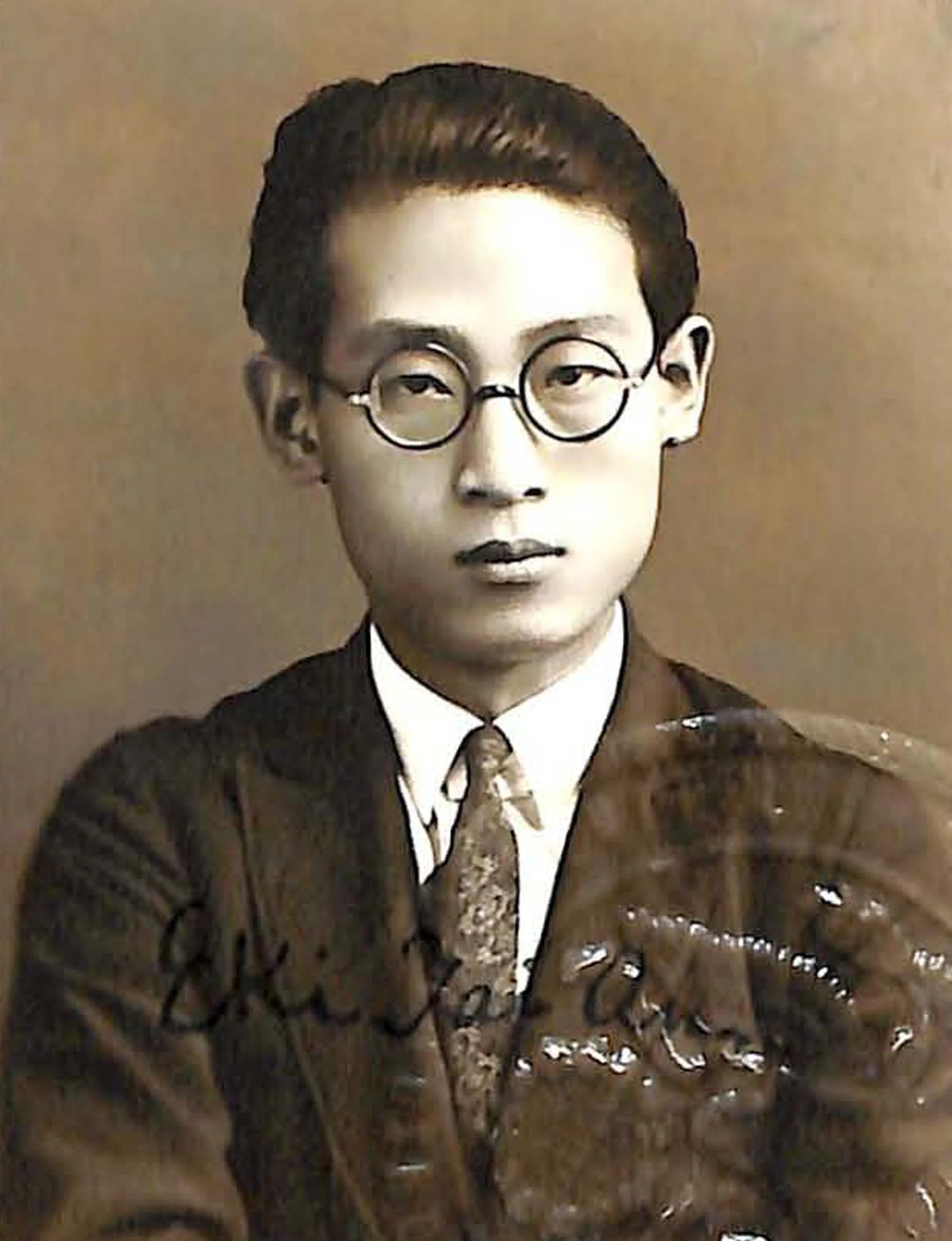
Immigration Visa for “An Skitai” 29534/009-02. NARA, RG 85: Records of the Immigration and Naturalization Service, NAID: 28872930. (link)
Ahn Eak-tai
Ahn Eak-tai was a classical composer and conductor born to a wealthy family in Pyongyang, Korea, in 1906. Throughout his career, he conducted the Vienna Philharmonic and Berlin Philharmonic orchestras. He is best known for composing Aegukga, the song that would become the national anthem of South Korea in 1948.
Ahn arrived in San Francisco on September 3, 1930. Because Korea was then under Japanese occupation, he traveled on a Japanese passport to attend the Cincinnati Conservatory of Music. Upon arrival, he was detained after reportedly refusing to hand over his cello to an inspector.
According to one source, Ahn convinced a watchman to return his cello so he could practice while in detention. He demonstrated such incredible skill with the instrument that he was released the following day. Because of this, Ahn’s stay on the island was short. He was admitted just two days after his arrival.
AEGUKGA’S LYRICIST
The history of the anthem Ahn Eak-tai composed is linked to another notable figure who passed through San Francisco: Ahn Chang-ho. Before Ahn Eak-tai composed a new melody for Aegukga in 1936, the lyrics of Aegukga—which many scholars attribute to Chang-ho—were sung to the tune of the Scottish folk song Auld Lang Syne.
Ahn Chang-ho, also known by the pen name Dosan, was a foundational leader of the Korean American community in the United States. He immigrated to San Francisco with his wife in 1902, becoming the first Korean couple to do so. He later established Pachappa Camp—the first Koreatown in the US—and the Korean National Association.
Ahn was able to avoid detention on Angel Island during a return trip to San Francisco in December 1924. However, after immigration officials cleared him for landing, they received an anonymous letter accusing Ahn of being a “Bolshevist.” Consequently, when officials eventually located him in Chicago, he was detained for questioning.
After his interrogation, he was permitted to stay in the US for a short time before finally departing on March 2, 1926.
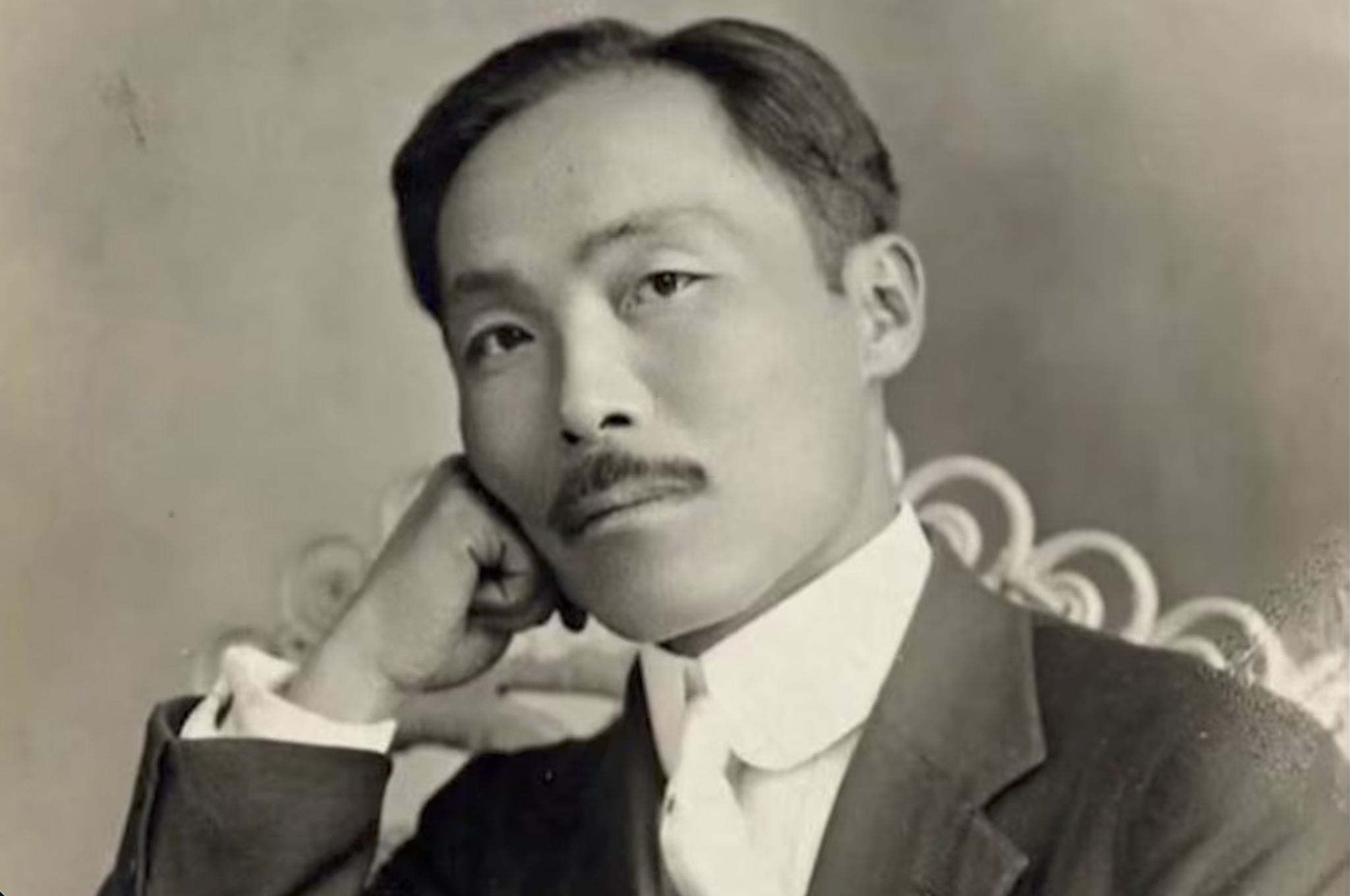
Ahn Chang-ho. (link)
Ahn Eak-tai is not the only notable composer from Angel Island’s past. Sergei Prokofiev, a Russian composer best known for masterpieces such as Peter and the Wolf and Romeo and Juliet, arrived in San Francisco on August 21, 1918. You can read about his detention on Angel Island at AIISF’s Immigrant Voices.
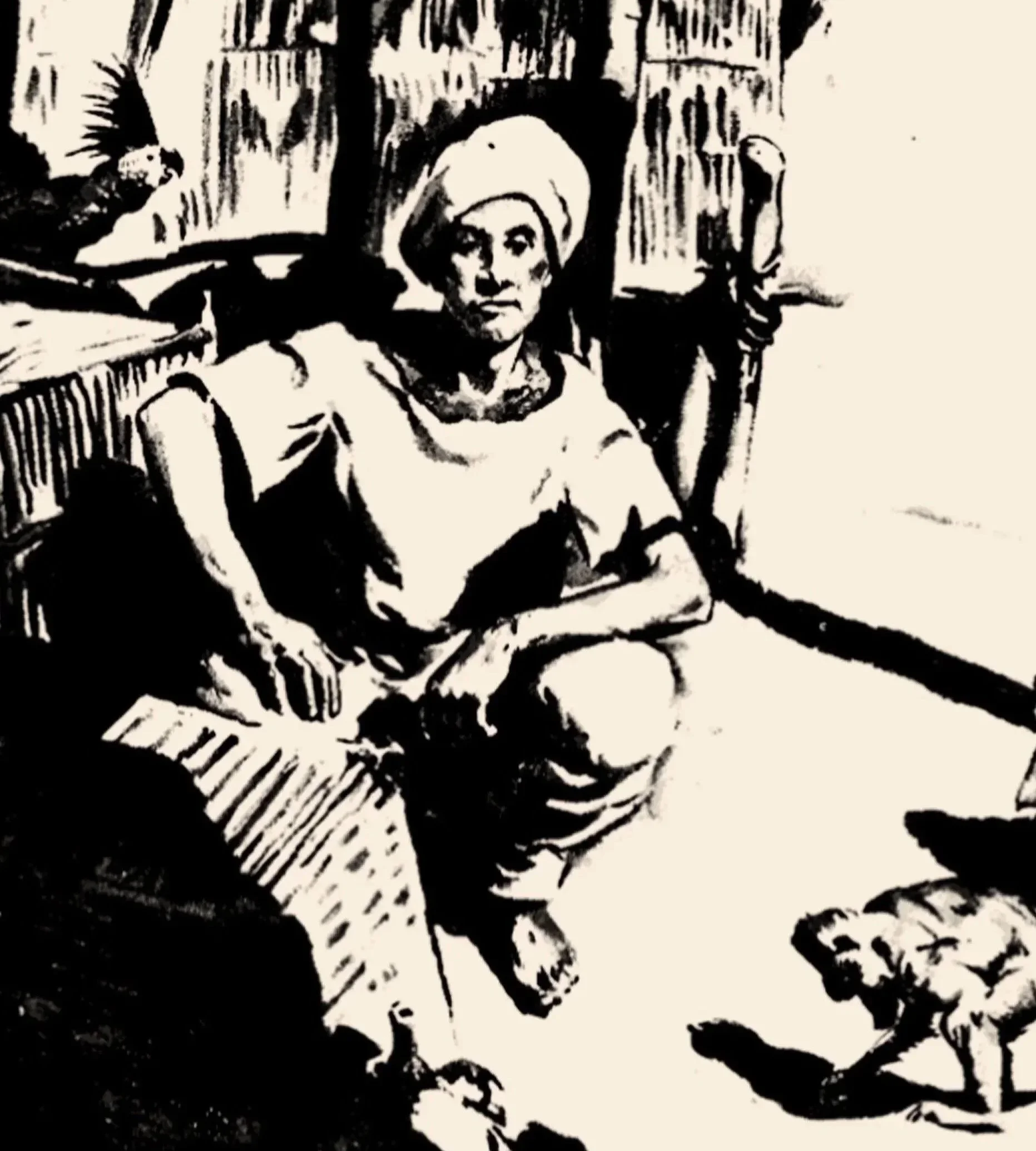
An illustration of Lal in Calcutta. “Story of Lal” by Frank Buck, Collier’s Weekly, May 5, 1934. (link)
Lal Bahadur
Lal Bahadur, who was of Bengali and Nepali heritage, was the partner and right hand of the famous animal collector Frank Buck. Bahadur was a highly skilled animal handler and cultural liaison who led jungle expeditions for over fifteen years. His work with Buck contributed to the capture and transport of over 100,000 exotic animals to zoos and circuses in the United States.
On their trip to the US, the San Francisco Bulletin reported that Buck’s ship carried “the largest menagerie that has ever been imported via the Pacific Coast.” It further explained that in addition to a pygmy elephant and an orangutan, “the collection included 3,000 birds, 350 monkeys in ten varieties, and a score of snakes.”
Bahadur was detained upon his arrival in San Francisco on November 9, 1922. Despite his role in managing the valuable cargo and his status as Buck's business manager, he was deemed "ineligible to land" under existing US laws. At the time, the Immigration Act of 1917 prohibited immigration from most of Asia and the Pacific Islands. This region was referred to as the Asiatic Barred Zone.
The following article appeared in the San Francisco Chronicle on December 29, 1922. It documents Bahadur’s arrival, detainment, and departure from the United States.
NATIVE GUIDE, INELIGIBLE TO LAND HERE AND HELD ON ANGEL ISLAND FOR MONTH, GLAD TO SET SAIL
Lal Bahadur… trapper of tigers, handler of all kinds of wild animals, leader of “boys,” and business manager for Frank Buck… expressed his disapproval of the United States immigration station at Angel Island as he sailed away to India yesterday on the President Pierce.
A month ago, Buck came back to civilization from the jungles of the Himalayas with Lal and a record-breaking shipment of wild animals for circuses and zoos. Lal left his native land with the idea of seeing America, but his calculations were thwarted and offers of thousand-dollar bonds and appeals to Washington… availed nothing, for Lal was not allowed to land.
For the last month, during which Buck distributed his animals about the country and prepared for his fourteenth and most extensive trapping expedition, Lal has remained on Angel Island. But yesterday, as the hunting trip was beginning… [Lal explained] that Angel Island did not meet with his satisfaction and that the jungle would look good to him again.
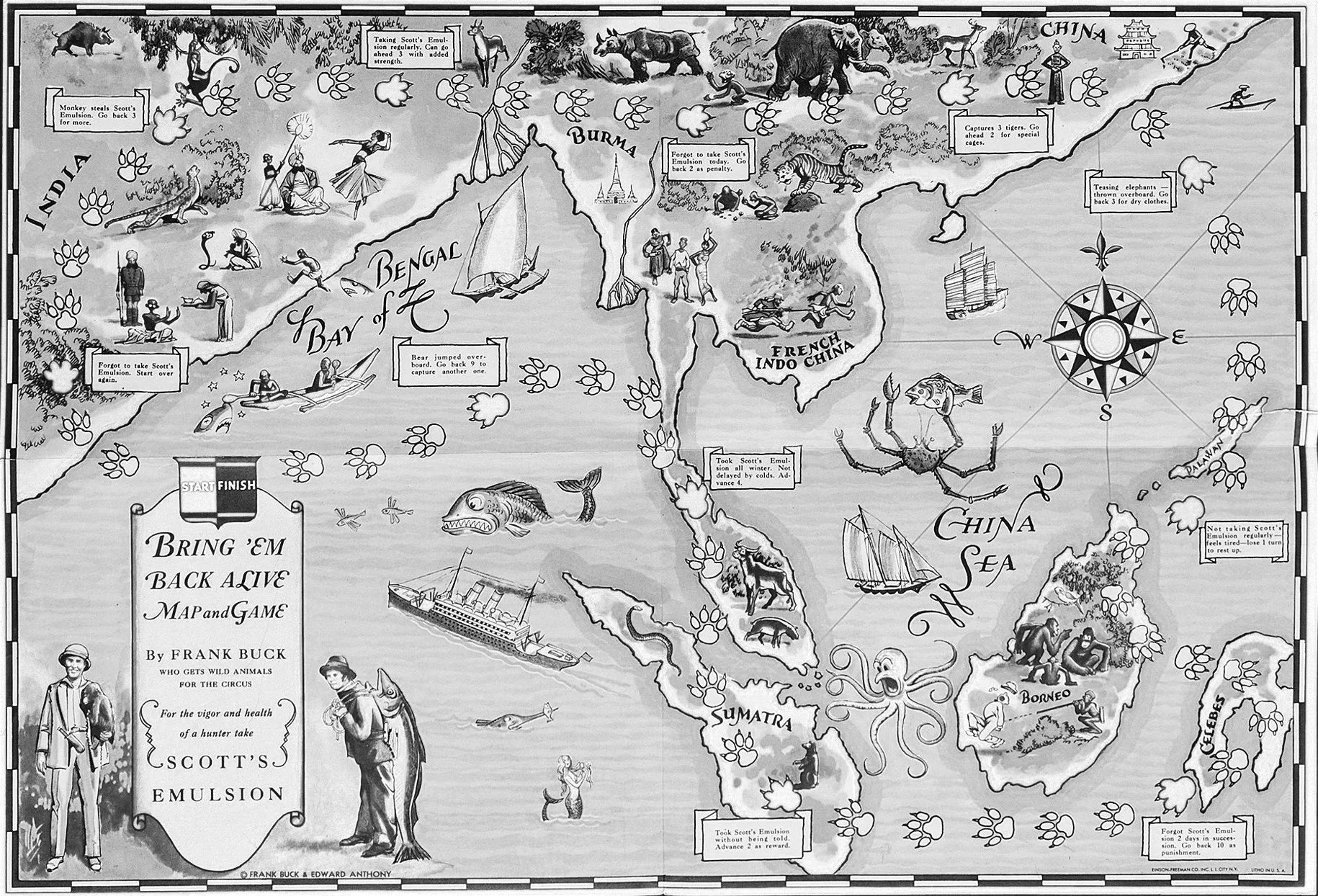
Frank Buck’s “Bring ‘Em Back Alive Map and Game” from 1934. The image shows the scope of Buck’s travels collecting animals in Southeast Asia.
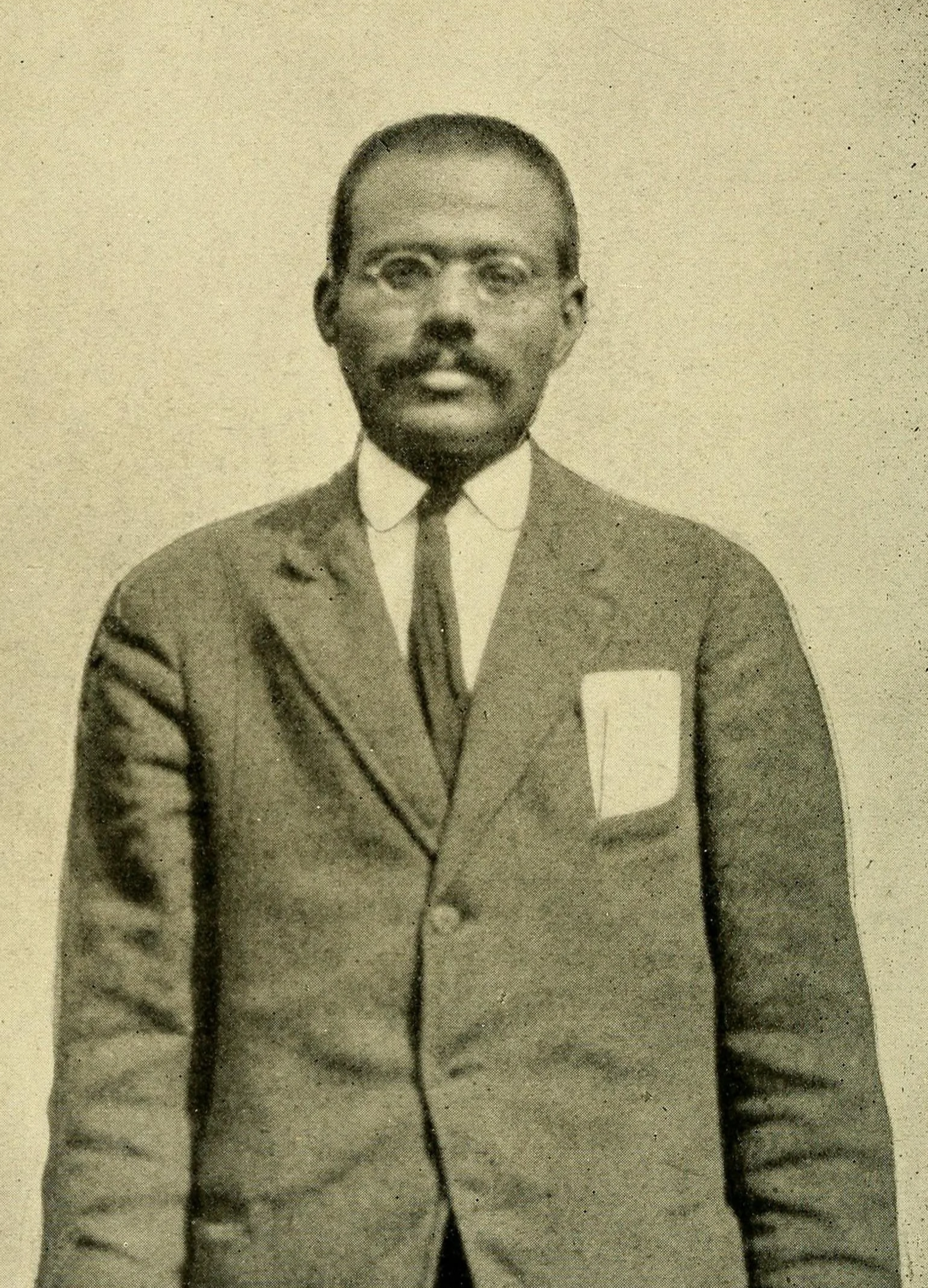
Har Dayal from Young India: An Interpretation and a History of the Nationalist Movement from Within, 1916. Library of Congress. (link)
Har Dayal
Har Dayal was an Indian revolutionary who founded the Gadar (Ghadar) Party, a San Francisco-based organization dedicated to liberating India from British colonial rule. Born in Delhi in 1884, Dayal moved to the United States in January 1911, and took an unsalaried position at Stanford University as a lecturer in Indian philosophy and Sanskrit.
Unlike a majority of immigrants held on Angel Island, Dayal’s detention occurred years after his arrival in the country. On March 25, 1914, he was arrested by immigration officers acting under significant pressure from the British government and taken to Angel Island because of his political activities.
In an article reprinted in the New Zealand Herald on April 28, 1914, the accusations against Dayal and his activities in the United States are discussed.
[SOUTH ASIAN] REFUGEE ARRESTED
“Har Dayal denies that he is an anarchist, or that he favours the overthrow of the Government of the United States. The section of the immigration law under which he was arrested reads: ‘Anarchists or persons who believe in anarchy or the overthrow of the Government of the United States or all government and all forms of law… shall be deported.’
Dayal freely admits, however, that he is a political refugee from India, that he is primarily an Indian revolutionist, his objective being to expel the British from India. He is said also to have done what he could to promote revolution in Russia.
His lectures here make it quite plain that in his attitude toward British rule in India, he is a rebel. In the house in which he lived in San Francisco is a printing press, where, with the aid of other [South Asian immigrants], he is alleged to have set up articles for distribution among the people of India, developing the spirit of rebellion.’”
His interrogation was held on Angel Island, but in an unusual move, the transcript from his questioning was elevated to the US State Department in Washington D.C., for review. Dayal was released March 27 on a $1,000 bond while his deportation case remained pending. However, recognizing the US government would likely side with British demands, he chose to flee the country.
Har Dayal and the Gadar Party attracted many Indian immigrants to the US West Coast. One supporter was Vaishno Das Bagai, who arrived in San Francisco with his family on September 6, 1915. Learn more about Bagai’s life, activism, and detention on Angel Island at AIISF’s Immigrant Voices.
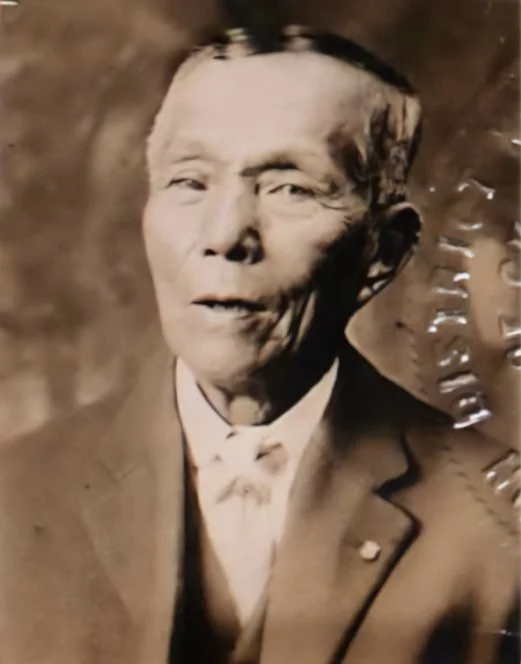
John Earl from his Seaman’s Certificate of American Citizenship, 1918. (link)
John Earl
According to newspaper reports, John Earl was born in Visalia, California, in 1836 and was of Chinese and Mexican heritage.* After leaving home at age 11, Earl traveled east and eventually served under Admiral David Farragut during the Battle of Mobile Bay in 1864.
Earl was detained on Angel Island twice because he had lost his Certificate of Residence in the 1906 San Francisco Earthquake. This devastating event also resulted in other Chinese records being lost. However, it created a unique legal loophole for many immigrants, leading to “paper sons” and “paper daughters.”
Earl’s first detention occurred in 1911, when he was 75, and the second detention was in 1917, at the age of 81. In both instances, immigration officials chose to believe his detailed accounts of his military service and life in America. He was released on both occasions, since his veteran status and personal testimony outweighed his lack of physical documentation.
Earl’s detentions on Angel Island resulted in numerous mentions in the local newspapers. During his first detainment, the San Francisco Examiner published a story that described Earl as a foreign-born immigrant who came to Boston from Singapore when he was 11 years old. It was published on May 10, 1911.
CIVIL WAR VETERAN DENIED A LANDING
“Although John Earl, half-Chinese and half-Javanese, has resided in the United States for sixty-four years, besides being a naturalized citizen for half a century, the immigration officials at San Francisco may place Earl in the position of a man without a country.”
After his second detention, the Santa Cruz Sentinel published an article that captured Earl’s story in his own words. The article was dated April 22, 1917.
AGED CHINESE TO END DAYS IN VALLEY
“[I] cannot stay away from the sea long. I have followed it since I ran away from home when I was 11 years old. When I was 15, I shipped at San Francisco on the sailing vessel John Wade, as a cabin boy, going around Cape Horn. My name of John Earl was given [to] me by an American school master in Salem, Mass. I joined the United States Navy in Boston when the Civil War broke out and was cabin steward for Admiral Farragut on the Ironsides at the battle of Mobile Bay. After the Civil War I went back to the Pacific Coast and was for four years wardroom steward on the revenue cutter Bear out of San Francisco.
When I am on land, I feel like a fish out of water. I left my children and grandchildren at 140 Bridge St., Watsonville, eight months ago, and signed as a cook on the Beluga, leaving San Francisco July 12. I am now going back to Watsonville and expect to end my days there.”
A memo regarding Earl’s case, March 21, 1917. NARA.
*Throughout his life, John Earl provided contradictory information regarding his heritage and birthplace. Until March 1917, Earl claimed he was born in Singapore to a Chinese father and a Malay or Javanese mother. However, from April 1917 until his death in February 1921, he maintained to the press that he was born in Visalia, California, to a Chinese father and a Mexican mother. Despite these inconsistencies, he is mostly remembered as a native Californian.
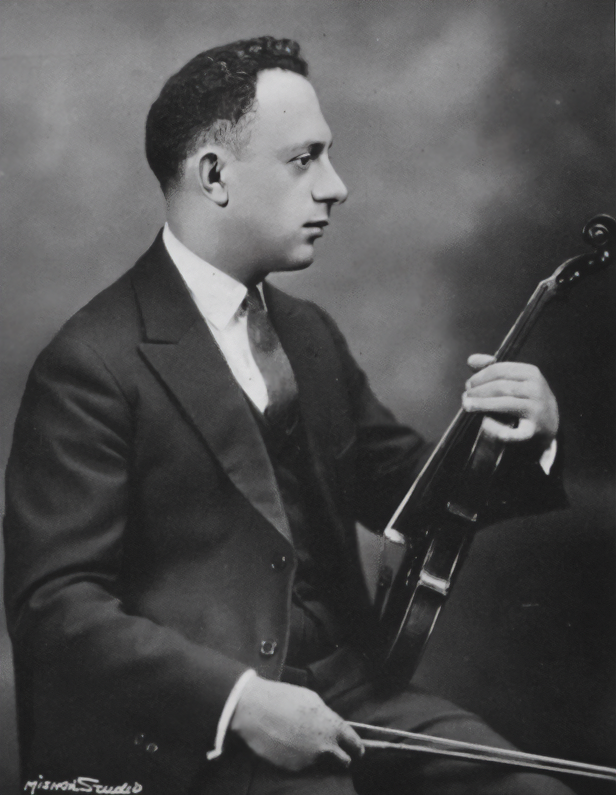
Abram Haitowitsch, Blind Violinist, “The Romance of High Courage” by Norma Gwendolyn Cheyne. Journal of Visual Impairment & Blindness, 1925. (link)
Abram Haitowitsch
Abram Haitowitsch was a gifted violinist born in Russia in the early 1890s. He lost his eyesight as a child following an accident that paralyzed his optic nerve. As a student, Haitowitsch devised his own Braille system to read sheet music and learned to play the violin. He went on to perform for Czar Nicholas II and the Russian royal family before receiving international acclaim during his tours of Russia and the US.
The Jewish violinist arrived in San Francisco with his brother on April 25, 1916. He was detained on Angel Island because of his disability. At the time, most disabilities were considered excludable conditions under immigration law. Immigrants would be labeled “likely public charge” (LPC), which meant they would not be able to support themselves financially. Despite facing deportation, Haitowitsch caught the attention of the station’s commissioner while playing his violin in detention.
What resulted from Haitowitsch’s performance was described in an April 30, 1916, article in the Sacramento Daily Union.
RUSSIAN GAINS ADMISSION TO COUNTRY BY MUSICAL ABILITY
“Abram Haitovich, a blind Russian musician, held with his 19-year-old brother at the immigration station here for deportation as aliens likely to become public charges, secured freedom and the right to land when Commissioner of Immigration Edward White heard him playing on the violin.
Through the open window of the commissioner’s office there floated the strains of Tchaikovsky’s ‘Serenade,’ played by a master hand. Impressed with the quality of the music, White ordered the Russian and his violin brought before him.”
A 1925 article from the Journal of Visual Impairment & Blindness provides additional details about Haitowitsch’s performance for the commissioner.
“The ‘Serenade’ was played again, also a Mendelssohn concerto, and the Commissioner, realizing that he was in the presence of a truly great talent and convinced that the Russian would never become a public charge, ordered the Board of Inquiry to convene. Dvorak’s ‘Humoresque,’ played before the Board, won an ovation, and on the sheer strength and beauty of his music, Abraham Haitowitsch was admitted to America.
Commissioner White went further—he invited musical critics, newspaper men, and the members of a prominent women’s club to hear Haitowitsch play. The Russian was installed at a hotel and stormed with requests for interviews. Besides admitting him to America, the Commissioner had introduced him to San Francisco… Today, Abraham Haitowitsch is winning a firm place in the regard of American audiences.”
After his performance in San Francisco, the New York Association of the Blind helped Haitowitsch with his first concert, where he received wide acclaim from local music critics.
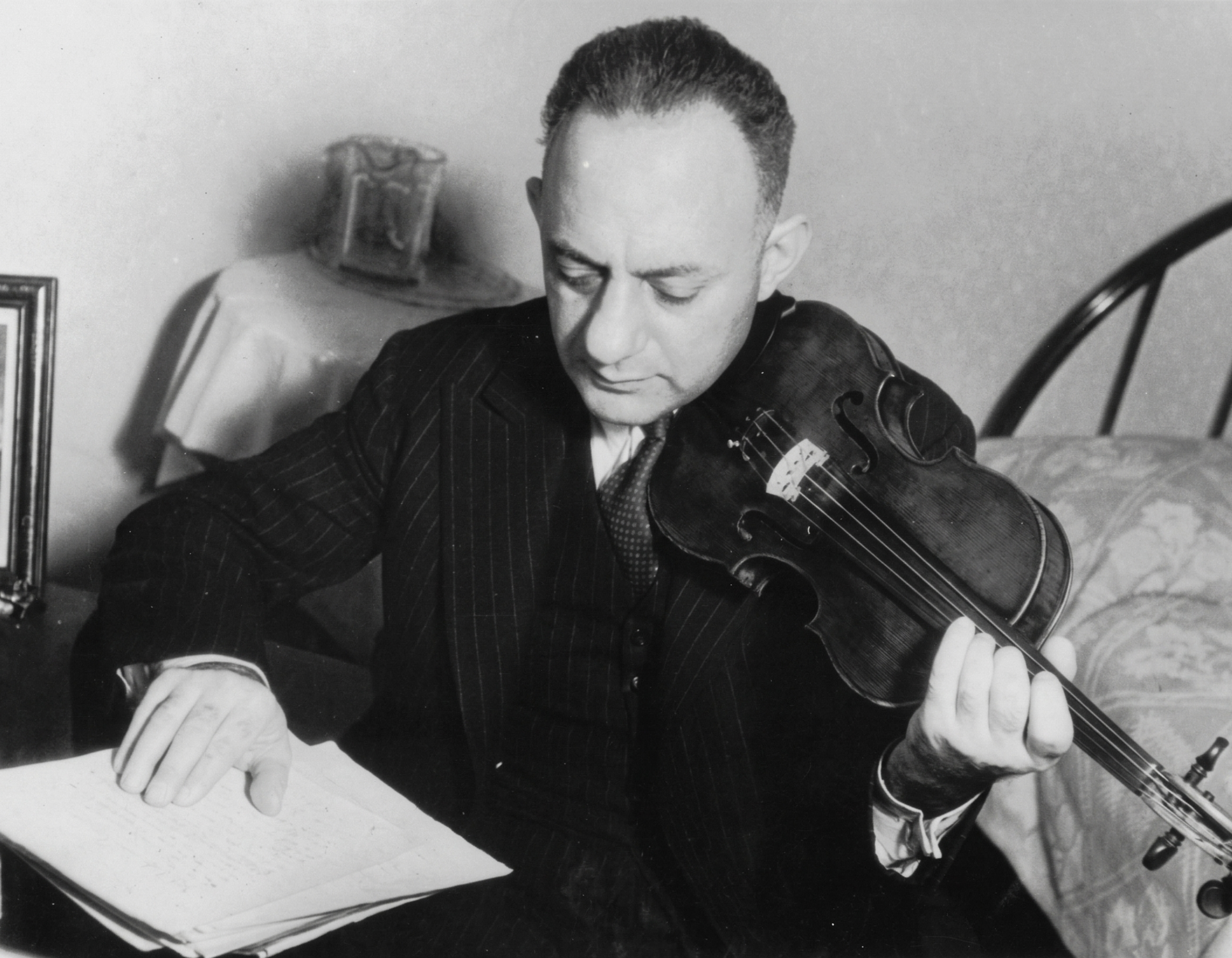
Haitowitsch in December 1938, 22 years after his arrival in the United States.
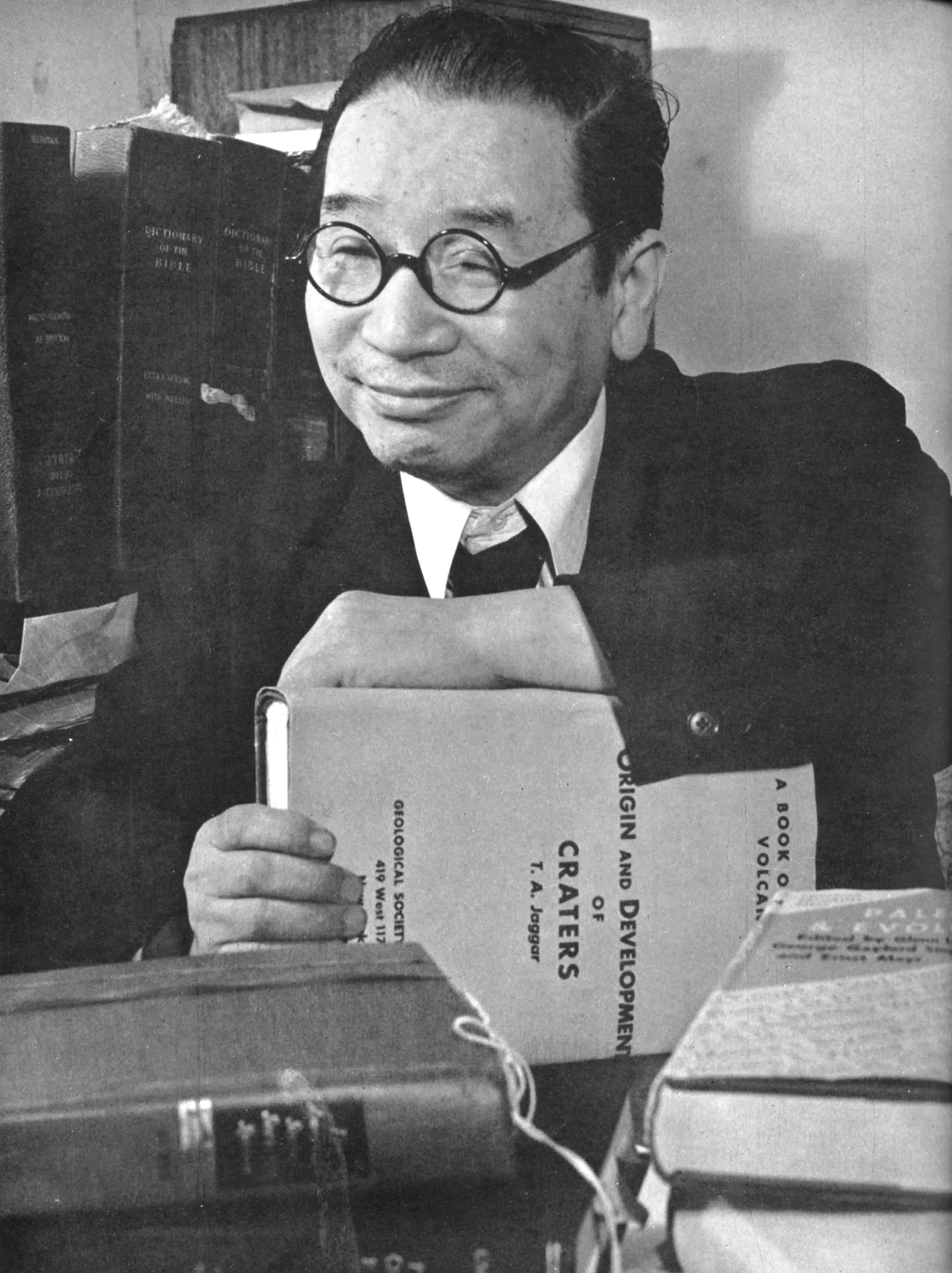
Dr. Toyohiko Kagawa by Shigeru Tamura. Gendai Nihon no Hyakunin (100 People in Modern Japan). Bungei Shunjū Shinsha, 1953. (link)
Toyohiko Kagawa
Toyohiko Kagawa, often called the “Gandhi of Japan,” was a prominent Christian reformer and pacifist born in Kobe, Japan. Dr. Kagawa arrived in San Francisco on December 19, 1935, to begin a seven-month lecture tour intended to spread his message of social justice across the United States.
Upon arrival, the Public Health Service detained Dr. Kagawa because he had contracted trachoma, an infectious eye disease, while working in Tokyo. At the time, trachoma was seen as a disease that largely affected Asian immigrants; its diagnosis nearly always led to deportation.
After learning of Kagawa’s situation, President Franklin D. Roosevelt asked his cabinet secretaries to admit the Christian leader into the country. The New York Times reported on the President’s intervention in Kagawa’s case on December 21, 1935.
ROOSEVELT ARRANGES PERMIT FOR DR. KAGAWA TO ENTER COUNTRY DESPITE HIS EYE DISEASE
“Dr. Kagawa’s plight was brought to Mr. Roosevelt’s personal attention by unnamed persons as a result of a complaint made by the Federal Council of Churches of Christ in America, the co-sponsor of a series of lectures planned for delivery by Dr. Kagawa.
The President used the regular Cabinet meeting, held this afternoon, as the occasion to ask Secretaries Hull, Perkins and Morgenthau to take appropriate steps in order that a final decision concerning admission of the prominent church leader might be reached without delay.”
Once they ordered his release, Kagawa was allowed to land, provided he travel with a nurse to ensure the infection did not spread during his tour. The resolution to Dr. Kagawa’s case was unusual since immigrant cases rarely reached members of the executive branch of the US government for a decision. It offers a rare glimpse of how privilege sometimes provided hope to immigrants held on Angel Island.
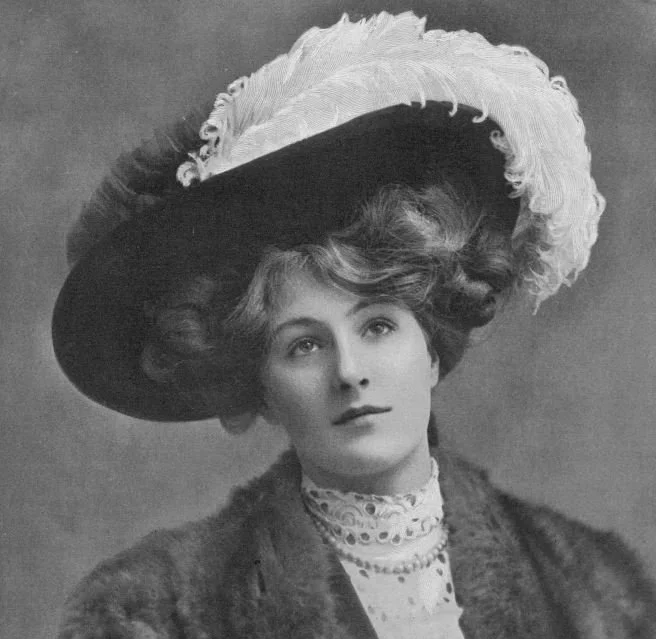
Edna Loftus. The Illustrated Sporting and Dramatic News, September 29, 1906. (link)
Edna Loftus
Edna Loftus was a prominent English theatrical star who achieved early fame as a performer in the music halls of France and England. Her professional success in Europe was followed by a move to the US in 1907, though her theatrical career was increasingly overshadowed by a series of personal and legal difficulties.
Loftus was detained because federal authorities believed her marriage to her second husband, Harry Rheinstrom, was invalid, because she could not prove she had divorced her first husband. At the time, immigrant women were frequently investigated for crimes of “morality.” By using the “likely public charge” (LPC) rule from the Immigration Act of 1882, the government could judge women based on their relationships or financial independence and deport those who they considered “undesirable” or morally suspect.
The actress was sent to Angel Island on April 10, 1913. In contrast to the heavy restrictions placed on Asian detainees at the immigration station, European detainees were granted more freedoms by officials. For example, Loftus had the opportunity to meet with a reporter from the Sacramento Star and try her case in the court of public opinion.
The following quote by Loftus appeared in an April 17, 1913, article in the Star. It has been edited for brevity.
EDNA LOFTUS, ONCE THEATRICAL STAR NOW CALLED AN “UNDESIRABLE ALIEN”
“Only yesterday I was a star; today, I—oh well, why worry about things we cannot help. Fate plays funny tricks with all of us. I left Sacred Heart Convent in France before I was 17. At 18 I was a star. I never played small parts; I never ‘suped.’ I made a hit right from the start.
And who do you suppose I worked with at the Gaiety in Paris? Gaby Deslys! I taught her to speak English on the stage. We were chums. Today she is a star. And today look at me! Five years ago, if anyone had told me that today I would be sitting in a detention dock with Japanese, Chinese, French, Germans, and Russians of the lower-class, I would have called him crazy.
My first husband was Winfield O’Connor, the famous jockey. My life with him was happy until the other woman came. She was my dearest friend. I took her to my house to live, to be my companion, my comrade, my pal, and she stole my husband. This was the beginning of my trouble. Since then, it has been out of the frying pan into the fire. Slowly I have been slipping, sliding down, down, and now this is the end. When I get out of this, I am going to change my name and go away to the country, where I hope I will never see a man!
I arrived in America in 1908 and started rehearsing for a play in New York, but I never showed in that play for I met Harry Rheinstrom, son of a Cincinnati millionaire brewer. We met at a party. It was a case of love at first sight... We settled down on a little ranch outside of Los Angeles, and were blissfully happy for six months… When Harry was taken away [to a sanatorium], I was left penniless. I arrived in San Francisco disheartened, discouraged, without means, and without friends. To whom could I turn? The outlook was so black that it appeared hopeless...
I was certainly born under an unlucky star. Circumstances were against me. Now, I am supposed to be bad. People read the stuff the newspapers print about me and it’s hard to get along. I never willfully did anything wrong in my life. When you are in trouble, it is surprising how few friends you have in what the world calls ‘society.’ It seems if you want people to stand by you, you have to go into the ‘underworld.’”
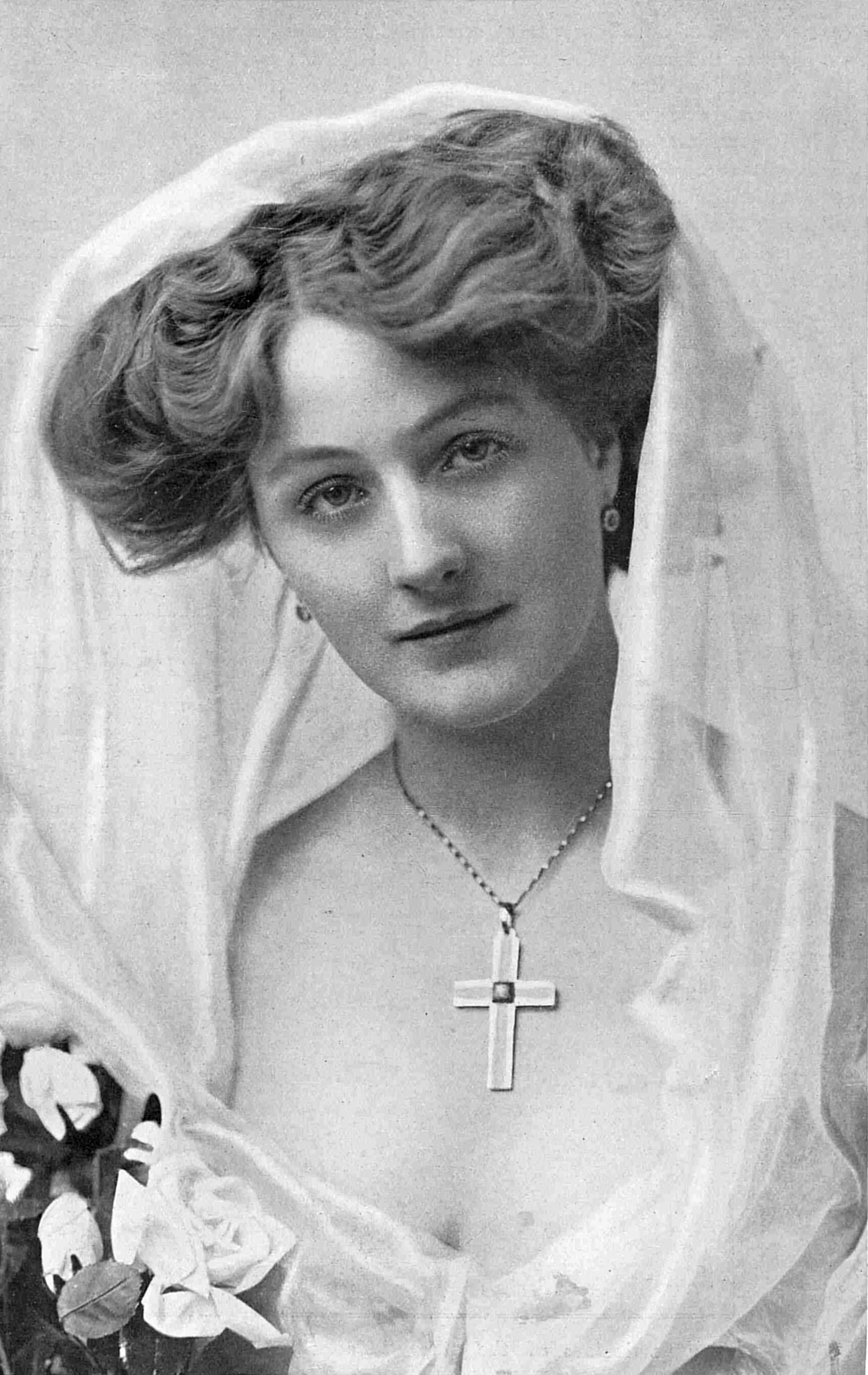
Edna Loftus in a publicity photo for the musical comedy, “The Catch of the Season.” The Tatler and Bystander, February 14, 1906. (link)
After a few weeks on Angel Island, the government recognized the validity of Loftus’s prior divorce and her subsequent marriage to Rheinstrom, which effectively granted her American citizenship.
A few years after Edna Loftus’s detention on Angel Island, another European actress made local news. Ferike Boros, a prominent Hungarian film star, was held at the immigration station in August 1918. She appeared in such Hollywood films like A Tree Grows in Brooklyn and Once Upon a Honeymoon.
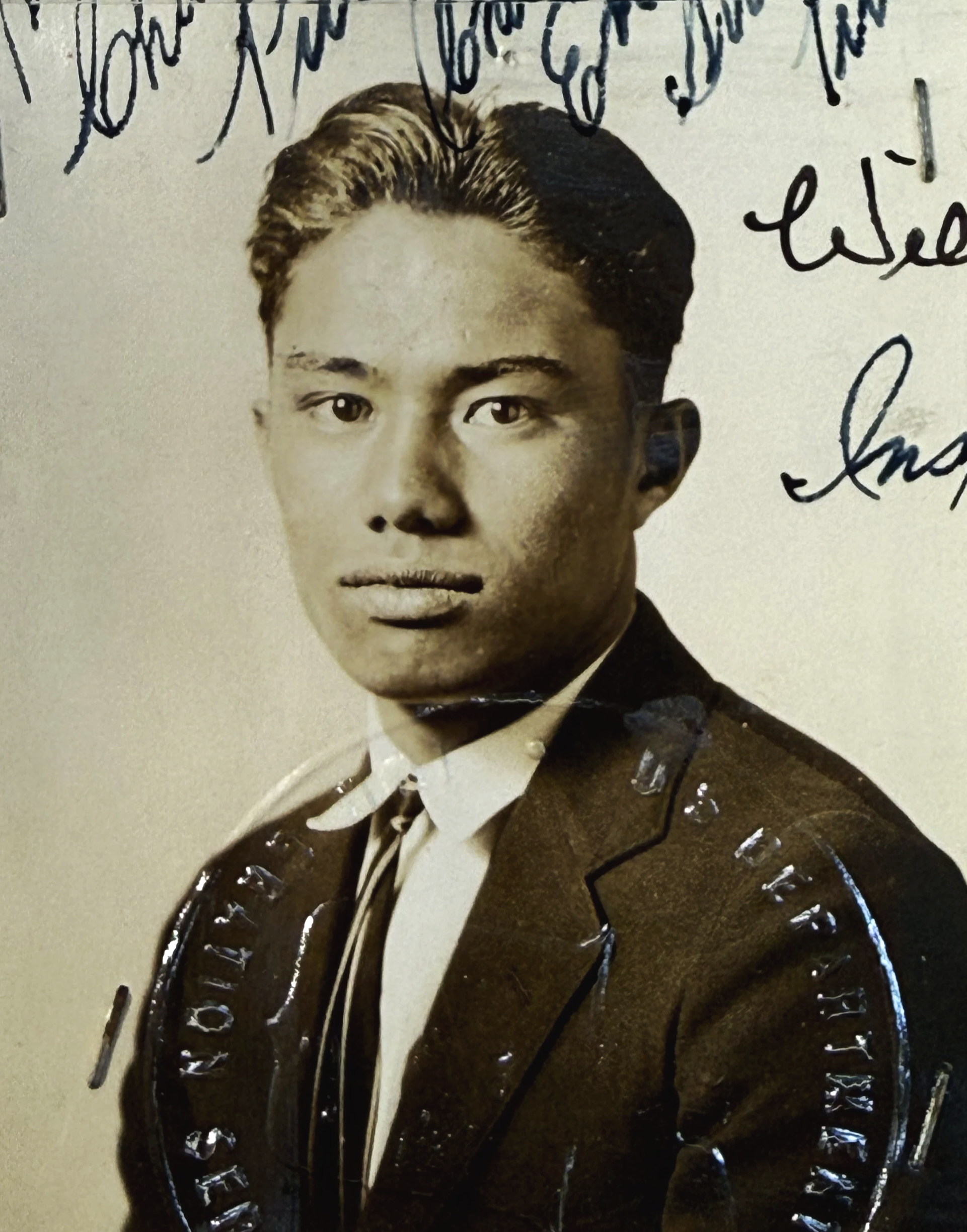
Application for a Temporary Visit Abroad for “Charles Pung.” National Archives, NAID: 28857410. (link)
Charles Pung
Charles Yuk Kun Kaiminaauao Pung was a professional swimmer who competed for the United States in the 1924 Paris Olympics. Born in 1905 to a Chinese-Hawaiian father and a Hawaiian mother, Pung was an integral part of a historic American swim team. However, his heritage made him a target of the restrictive immigration laws of the era.
On May 6, 1924, Pung was separated from his teammates and detained on Angel Island due to his partial Chinese ancestry. While his teammates were permitted to proceed, Pung was forced to undergo an investigation to prove his right to enter and travel as an American citizen.
News of Pung’s detention was reported in the Honolulu Star-Advertiser on May 7, 1924.
PUNG HELD AT ANGEL ISLAND GOV’T STATION
“Charles Pung, member of the Hawaiian Olympic swimming team, is being held at [the] Angel Island immigration station pending an investigation as to his eligibility to enter the United States. Charles Pung is the son of Charles En Sue Pung of this city, the latter being well known here on the mainland as a baseball player with the All-Chinese baseball team which has toured the mainland several times. En Sue is a native of the islands, and American by birth, while his father, Charles Pung’s grandfather, was naturalized a Hawaiian citizen under the Monarchy during the reign of King Kalākaua, long before the United States annexed the territory.”
Following his release, Pung reunited with his team and traveled to Paris. Led by the legendary Duke Kahanamoku, the team went on to win 19 of the 33 medals awarded—the most dominant performance in Olympic swimming history.
En Sue Pung
A decade before Charles Pung was detained at the immigration station, his father En Sue Pung almost shared the same fate. On March 11, 1914, the Hawaiian All-Chinese baseball team arrived in San Francisco. The San Jose Mercury News published a story the next day saying the team escaped detention on Angel Island because of the “famed prowess” of outfielder En Sue.
TY COBB THE SECOND PERMITTED TO LAND
“The immigration officials were deaf to protests that the players were native-born American citizens, that eight were voters, and six members of the Hawaiian national guard. ‘We’re sorry,’ said the officials, ‘but these men are [Chinese] and must undergo the usual examination.’
Then it was pointed out the En Sue was known as ‘Ty Cobb the Second.’ Whereupon the officials relented and the players were permitted to come ashore. The team will play its first game today with the University of California. After a series of games in California, the visitors will make a tour of the country, afterward going to Cuba.”
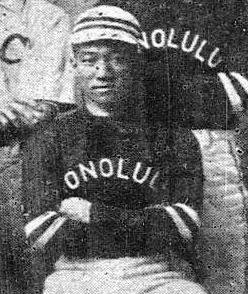
Charles En Sue Pung. (link)
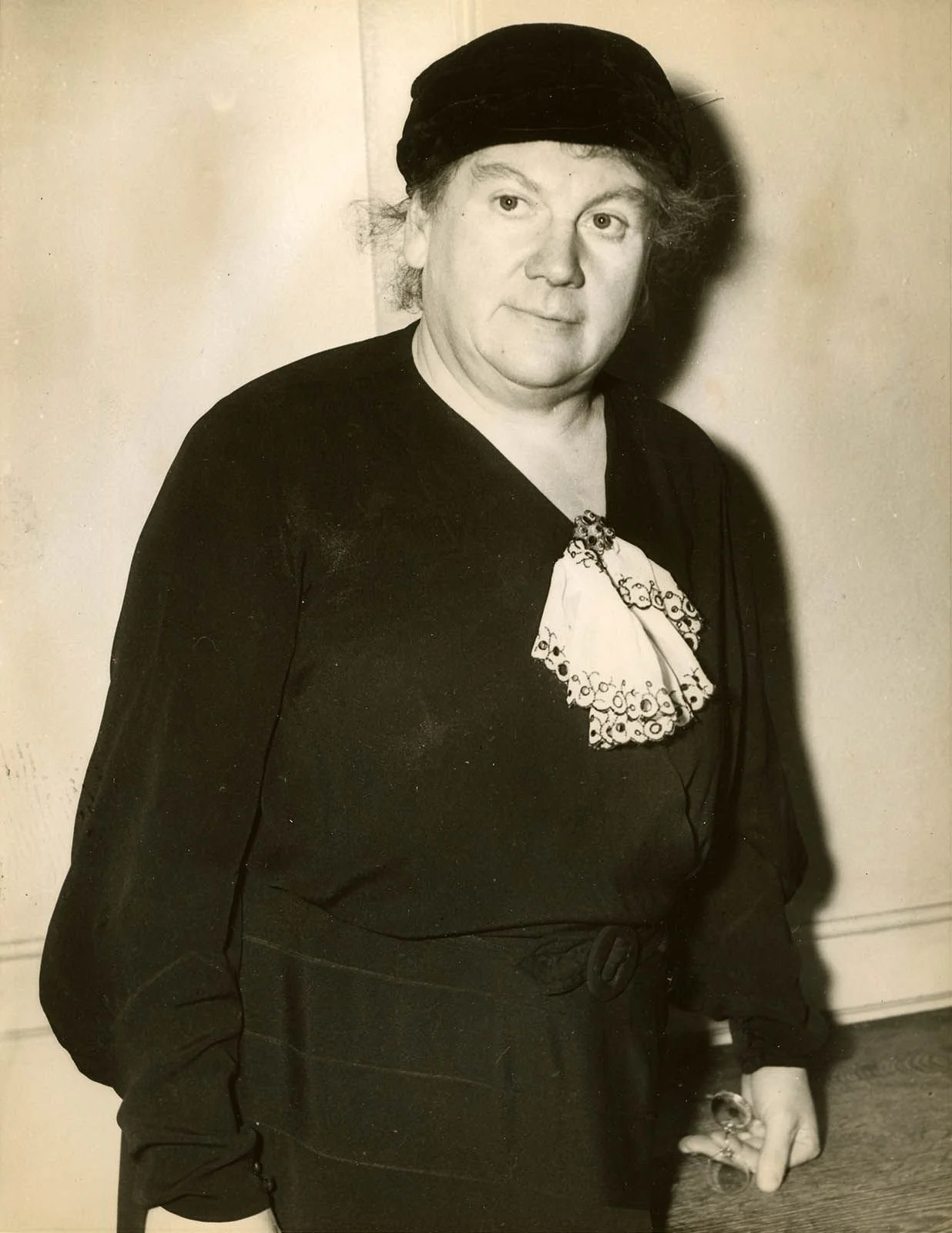


Alexandra Tolstaya (Tolstoy) after speaking at Cooper Union in New York City, 1934. Encyclopædia Britannica. (link)
Alexandra Tolstoy
Countess Alexandra Tolstoy was the youngest daughter of the famed Russian novelist Leo Tolstoy and the co-founder of the Tolstoy Foundation. Born in 1884, she served as her father’s secretary from the age of 17 and managed his estate after his death in 1910. She arrived in San Francisco on July 29, 1931, seeking refuge and opportunity in the United States.
On August 4, 1931, the Colusa Herald elaborated on how the countess avoided Angel Island, while others she traveled with did not. The article highlights how immigration officials would sometimes save themselves from public embarrassment by giving favorable treatment to high-profile passengers.
“Traveling third class, in accordance with the principles of her noted author father, Count Tolstoy, nearly resulted in Alexandra Tolstoy spending her first night in America at the Angel Island immigration station. The countess arrived in San Francisco Wednesday aboard the liner Tatsuta Maru, and only a special governmental courtesy removed in her case the rule that all third-class passengers from the Orient be confined at the immigration station for strict medical examination.”
Under inspection, Public Health Service officials diagnosed Tolstoy with “defective vision” but concluded her poor eyesight would not prevent her from making a living as a lecturer. She then had to convince immigration officials that she was not a supporter of communism. After World War I, “Bolshevism” was considered a deportable offense. Russian refugees fleeing the country were often treated with increased suspicion and investigated for their ideology on Angel Island.
In Countess Tolstoy’s book, Out of the Past, she describes her experience under questioning.
“I came to America to fight Communism, to give lectures against the Bolsheviks, and of course [the immigration officials] would understand this and will let me through right away. But it was not like that. At first the official who questioned me was very severe. ‘I don’t understand,’ he said, ‘why, if you are so opposed to Bolshevism, you lived freely in Soviet Russia for twelve years and the Bolsheviks never touched you!’
I had to tell him how I was arrested five times, how Lenin helped me, and how a decree was issued to the effect that the Tolstoy institutions should remain free of anti-religious propaganda in memory of Leo Tolstoy. ‘Then how did it happen that they finally let you go?’ I told him how I was able to outwit the authorities, promising to return within a few months, saying that, as director of the Yasnaya Polyana Experimental Station, I had to study schools in Japan and America. I described the life of the Russian peasants and workers, and the massive repressions.”
Countess Tolstoy later described her two-hour interrogation as “the most difficult lecture that I ever gave in America.”
Countess Tolstoy’s Board of Special Inquiry opening statements, July 30, 1931. NARA
Several titled women, besides Countess Tolstoy, were stopped by immigration officials upon their arrival in San Francisco. Princess Ina Salmon, also called the “Helen of Troy of Tahiti,” was detained on September 4, 1913, during her first trip to the United States. You can find her story at AIISF’s Immigrant Voices.
Baek Sukgi, “Woongjin weeinjungi #34 Ahn Ikte,” Woongjin Publishing Co. Ltd., 1987.
Buck, Frank. “Story of Lal,” Collier’s Weekly, pp. 21 and 63, May 5, 1934.
Cheyene, Norma Gwendolyn. “The Romance of High Courage,” Journal of Visual Impairment & Blindness, Volume 19, Issue 1, 1925.
Colusa Herald. “Countess,” August 4, 1931.
Evening Express. “Detain Member of Hawaiian Swim Team,” May 7, 1924.
Honolulu Star-Advertiser. “Pung Held at Angel Island Gov’t Station,” May 7, 1924.
Honolulu Star-Bulletin. “The Case of Charley Pung,” May 7, 1924.
Jay, Alex. “John Earl,” The Blue, the Gray, and the Chinese blog, August 5, 2019.
NARA. Immigration file for An Skitai (Ahn Eak-tai), 29534/009-02.
NARA. Immigration file for Abram Haitovich, 15189/4-9.
NARA. Immigration file for John Earl, 16021/2-8.
NARA. Immigration file for Toyohiko Kagawa, 35843/6-2.
NARA. Immigration file for Alexandra Tolstoy, 30644/23-1.
New York Times. “Roosevelt Arranges Permit for Dr. Kagawa to Enter Country Despite His Eye Disease,” December 21, 1935.
New Zealand Herald. “Hindoo Refugee Arrested,” April 28, 1914.
Oakland Tribune. “Edna Loftus is Arrested. Actress Faces Deportation,” April 10, 1913.
Oakland Tribune. “Tolstoy Girl Shuns Russia,” July 30, 1931.
Sacramento Star. “Edna Loftus, Once Theatrical Star Now Called an ‘Undesirable Alien,’” April 17, 1913.
San Francisco Bulletin. “Noah’s Ark Came in from the Orient,” November 1922.
San Francisco Call. “Hungarian Actress Will Be Released,” August 15, 1918.
San Francisco Examiner. “Civil War Veteran Denied a Landing,” May 10, 1911.
San Francisco Examiner. “Native Guide, Ineligible to Land Here and Held at Angel Island for Month,” December 1922.
San Jose Mercury News. “Farragut’s Cabin-Boy Has Wanderlust at 81,” May 6, 1917.
San Jose Mercury News. “Har Dyal is Free on Bonds of $1000,” March 27, 1914.
San Jose Mercury News. “Ty Cobb the Second Permitted to Land,” March 13, 1914.
Santa Cruz Sentinel. “Aged Chinese to End Days in Valley,” April 22, 1917.
Shinsekai asahi Shinbun [New World Sun], “Kagawa Detained at Angel Island by Medical Board; Release is Expected Early,” December 20, 1935.
Stockton Independent. “Our Customs Official Was Rough With a Prince,” August 16, 1916.
The Times Standard. “Was Cabin Boy for Farragut; Half Chinese,” November 30, 1920.
Sacramento Daily Union. “Russian Gains Admission to Country by Musical Ability,” April 30, 1916.
Tolstoy, Alexandra. Out of the Past, New York, Columbia University Press, pg. 313, 1981.